Writers on Memory, Language & the Power of the Unconscious

Writers on Memory, Language & the Power of the Unconscious

Katie Kitamura, Paul Lynch, Daniel Pearle, Hala Alyan, T.C. Boyle, Adam Alter, Shehan Karunatilaka, Daniel Handler a.k.a Lemony Snicket, and Ada Limón share their stories

How can we use negative spaces in fiction to engage with readers’ imaginations? How are memory and trauma passed onto us through language? How do we become more than the stories we tell ourselves?

On Oneness & Self-Healing w/ LD Chen - Head Coach, Oneness Institute, US & EU - Highlights

On Oneness & Self-Healing w/ LD Chen - Head Coach, Oneness Institute, US & EU - Highlights

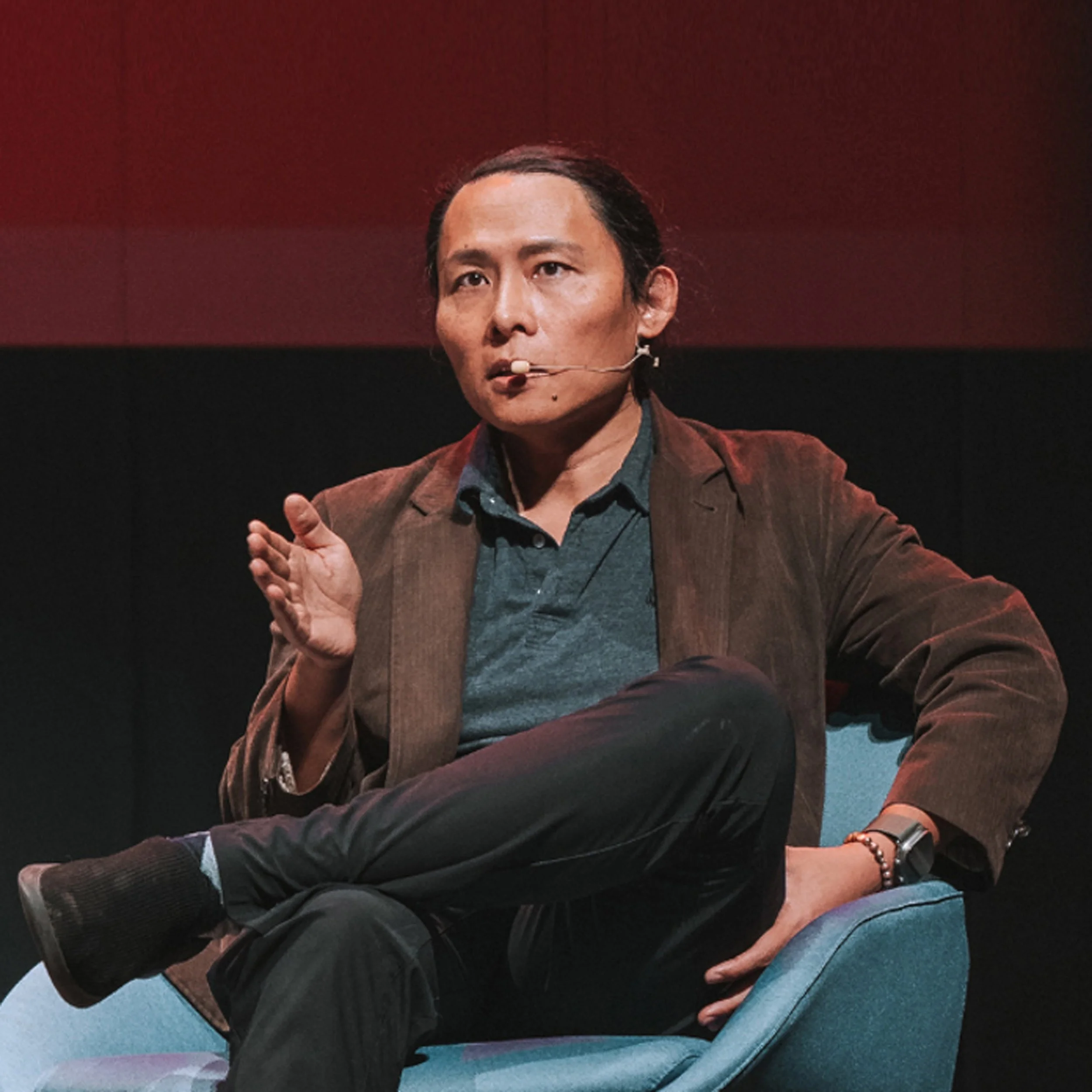
A Conversation with LD CHEN · A 4th Generation of Dacheng Quan · Head Coach of Oneness Institute of America & Europe

Oneness is actually not about learning in the usual way. Most teachings tell you how to learn — how to let go, how to calm down, how to manage anger. Oneness does the opposite: we stand, we train the body to correct the heart, and then we live from that heart.

Oneness: A Way of Living with LD Chen - Author & Head Coach, Oneness Institute, US & EU

Oneness: A Way of Living with LD Chen - Author & Head Coach, Oneness Institute, US & EU

A Conversation with LD CHEN · A 4th Generation of Dacheng Quan · Head Coach of Oneness Institute of America & Europe

Oneness is actually not about learning in the usual way. Most teachings tell you how to learn — how to let go, how to calm down, how to manage anger. Oneness does the opposite: we stand, we train the body to correct the heart, and then we live from that heart.

The AI Wager: Betting on Technology’s Future w/ Philosopher & Author SVEN NYHOLM - Highlights

The AI Wager: Betting on Technology’s Future w/ Philosopher & Author SVEN NYHOLM - Highlights

Conversation with SVEN NYHOLM, Prof. of Ethics of AI, LMU Munich · Lead Investigator, AI Ethics, Munich Center for Machine Learning · Author of Humans and Robots · The Ethics of Artificial Intelligence

 I think we're betting on AI as something that can help to solve a lot of problems for us. It's the future, we think, whether it's producing text or art, or doing medical research or planning our lives for us, etc., the bet is that AI is going to be great, that it's going to get us everything we want and make everything better. But at the same time, we're gambling, at the extreme end, with the future of humanity  , hoping for the best and hoping that this, what I'm calling the AI wager, is going to work out to our advantage, but we'll see.

The Ethics of AI w/ SVEN NYHOLM, Author & Lead Researcher, Munich Centre for Machine Learning

The Ethics of AI w/ SVEN NYHOLM, Author & Lead Researcher, Munich Centre for Machine Learning

Conversation with SVEN NYHOLM, Prof. of Ethics of AI, LMU Munich · Lead Investigator, AI Ethics, Munich Center for Machine Learning · Author of Humans and Robots · The Ethics of Artificial Intelligence

 I think we're betting on AI as something that can help to solve a lot of problems for us. It's the future, we think, whether it's producing text or art, or doing medical research or planning our lives for us, etc., the bet is that AI is going to be great, that it's going to get us everything we want and make everything better. But at the same time, we're gambling, at the extreme end, with the future of humanity  , hoping for the best and hoping that this, what I'm calling the AI wager, is going to work out to our advantage, but we'll see.

BASQUIAT: The Price of Fame w/ Author DOUG WOODHAM - Highlights

BASQUIAT: The Price of Fame w/ Author DOUG WOODHAM - Highlights

A Conversation with Author DOUG WOODHAM
Managing Partner, Art Fiduciary Partners

All of the great artists are there for a reason: because they rebelled in some way. They created a visual vocabulary that felt fresh and new, which excited people. So, the great artists are not built on sort of anthills of sand. They're built on things of substance and of meaning. Though this is not a sufficient condition to become an icon, it's a necessary but not sufficient condition. I think you have to have an interesting and vivid personality or personal narrative that makes you interesting for people to talk about and want to learn about. I think you also have to have a support network of galleries, curators, and collectors who are excited about your work and want to push it forward, not wanting it to be forgotten. Basquiat's visual vocabulary is distinctive and stands out relative to what was being done in the 1980s. That's the sort of strong hill on which his reputation is built. Basquiat benefited from being the first black artist of note who got pushed forward. As in many things, the first benefits.

JEAN-MICHEL BASQUIAT: The Making of an Icon with DOUG WOODHAM, Fmr. President of Christie's Americas

JEAN-MICHEL BASQUIAT: The Making of an Icon with DOUG WOODHAM, Fmr. President of Christie's Americas

A Conversation with Author DOUG WOODHAM
Fmr. President of the Americas at Christie’s · Managing Partner, Art Fiduciary Partners

All of the great artists are there for a reason: because they rebelled in some way. They created a visual vocabulary that felt fresh and new, which excited people. So, the great artists are not built on sort of anthills of sand. They're built on things of substance and of meaning. Though this is not a sufficient condition to become an icon, it's a necessary but not sufficient condition. I think you have to have an interesting and vivid personality or personal narrative that makes you interesting for people to talk about and want to learn about. I think you also have to have a support network of galleries, curators, and collectors who are excited about your work and want to push it forward, not wanting it to be forgotten. Basquiat's visual vocabulary is distinctive and stands out relative to what was being done in the 1980s. That's the sort of strong hill on which his reputation is built. Basquiat benefited from being the first black artist of note who got pushed forward. As in many things, the first benefits.

On Mind Games, Power & Obsession - Showrunner HOWARD GORDON & Writer DANIEL PEARLE - Highlights

On Mind Games, Power & Obsession - Showrunner HOWARD GORDON & Writer DANIEL PEARLE - Highlights

Starring CLAIRE DANES & MATTHEW RHYS
A Conversation with Showrunner, Exec. Producer HOWARD GORDON & Exec. Producer Writer DANIEL PEARLE

And I think there's also just something about an unfettered or uncensored id that is so captivating. We all have that fantasy of doing exactly what we want with no consequences and sort of letting that go. I think when you see an athlete at the peak of their game, doing that embodied thing and living that dream, or when someone has actually done horrible things that you would never allow yourself to do, there is a fascination there. I had one teacher who said, "Anyone who drives you crazy or that you just cannot stand in life, put them in a play or put them in a scene, and the audience will love them." If someone has really gotten under your skin and you just cannot stand them, and you have a visceral reaction—like, "I just hate this person"—make them a character, and the audience will make them everyone's favorite character. There is something to that.

The Beast in Me starring CLAIRE DANES - Behind the Scenes w/ HOWARD GORDON & DANIEL PEARLE

The Beast in Me starring CLAIRE DANES - Behind the Scenes w/ HOWARD GORDON & DANIEL PEARLE

Starring CLAIRE DANES & MATTHEW RHYS
A Conversation with Showrunner, Exec. Producer HOWARD GORDON & Exec. Producer Writer DANIEL PEARLE

And I think there's also just something about an unfettered or uncensored id that is so captivating. We all have that fantasy of doing exactly what we want with no consequences and sort of letting that go. I think when you see an athlete at the peak of their game, doing that embodied thing and living that dream, or when someone has actually done horrible things that you would never allow yourself to do, there is a fascination there. I had one teacher who said, "Anyone who drives you crazy or that you just cannot stand in life, put them in a play or put them in a scene, and the audience will love them." If someone has really gotten under your skin and you just cannot stand them, and you have a visceral reaction—like, "I just hate this person"—make them a character, and the audience will make them everyone's favorite character. There is something to that.

In the Presence of the DALAI LAMA - Doc. Director of WISDOM OF HAPPINESS - Highlights

In the Presence of the DALAI LAMA - Doc. Director of WISDOM OF HAPPINESS - Highlights

 Everybody wants happiness, joyfulness, peaceful world. Our 21st century will not be easy century… I can change my mind. I can reduce anger, hatred. Nothing to do with religion. All religions carry the message of love, loving kindness, and tolerance. This century should be century of compassion, century of peace. No more bloodshed. We should develop a big “we,” rather than “we” or “they.” With these wings, you can fly. -DALAI LAMA

WISDOM OF HAPPINESS - Heart-to-Heart w/ DALAI LAMA - Conversation w/ Director Barbara Miller

WISDOM OF HAPPINESS - Heart-to-Heart w/ DALAI LAMA - Conversation w/ Director Barbara Miller

 Everybody wants happiness, joyfulness, peaceful world. Our 21st century will not be easy century… I can change my mind. I can reduce anger, hatred. Nothing to do with religion. All religions carry the message of love, loving kindness, and tolerance. This century should be century of compassion, century of peace. No more bloodshed. We should develop a big “we,” rather than “we” or “they.” With these wings, you can fly. -DALAI LAMA

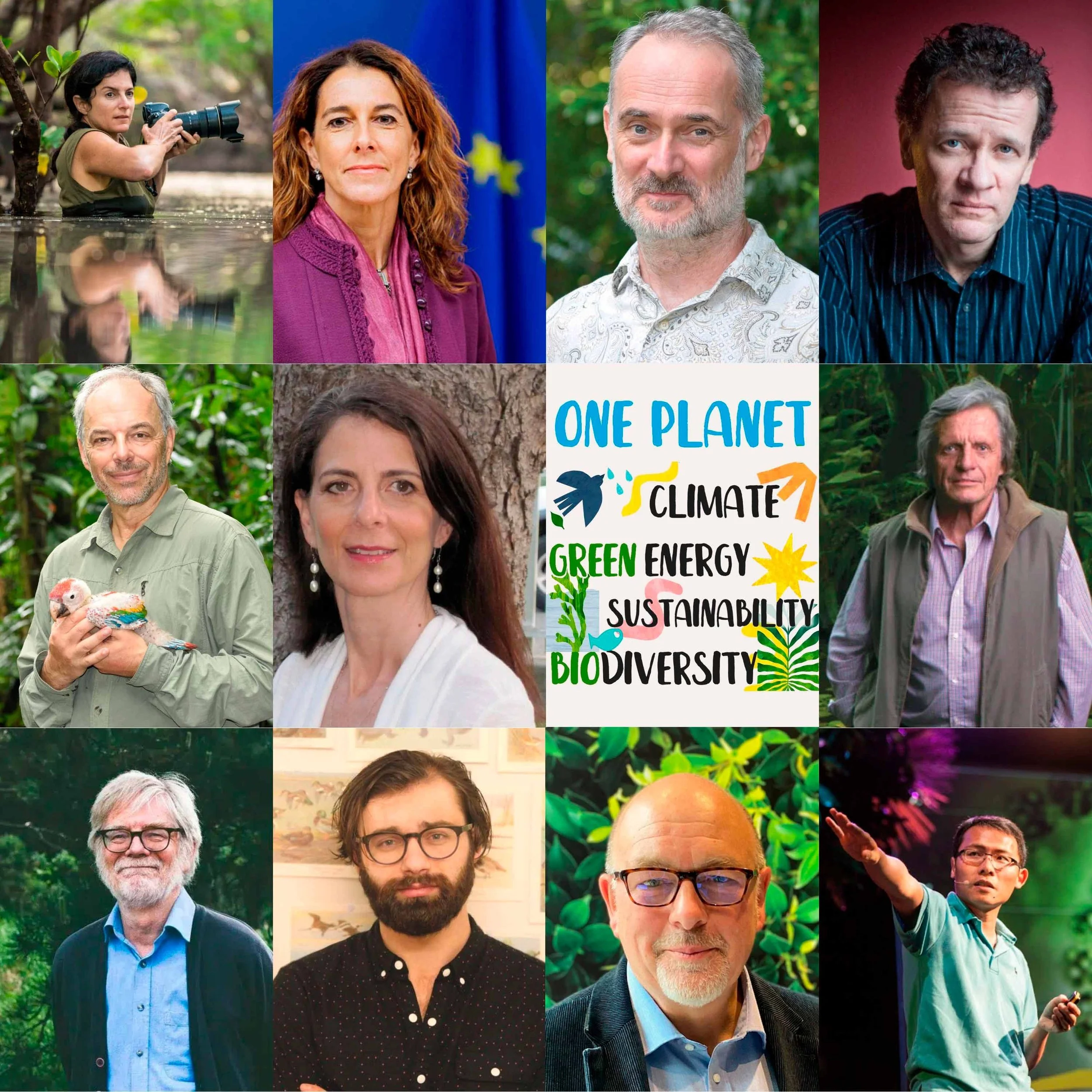
Listening to the Planet -  Writers' Perspectives on Nature, Place & Interconnectedness

Listening to the Planet - Writers' Perspectives on Nature, Place & Interconnectedness

Katie Kitamura, Eiren Caffall, Jay Parini, Irvin Weathersby Jr., Natasha Hakimi Zapata, Audrea Lim & Dr. Bayo Akomolafe share their stories

How do our environments shape who we are and how we care for the world and each other? There are many solutions to climate change, inequality, and poverty around the world. How can we learn from them and transform our society?

The Arrogant Ape: The Myth of Human Exceptionalism & Why it Matters with CHRISTINE WEBB

The Arrogant Ape: The Myth of Human Exceptionalism & Why it Matters with CHRISTINE WEBB

A Conversation with Primatologist CHRISTINE WEBB

There are many ways in which I think human exceptionalism has seeped into the sciences, but one of the many ways is through the methodologies we use when we compare the intelligence of humans and other species. In particular, in my field, I’m a primatologist by training, comparing the cognitive abilities of humans with the abilities of our closest living relatives, the great apes. Many times, those studies compare the intelligence of captive chimpanzees who are living in highly restricted, manmade environments. Often, these chimpanzees have been separated from their biological mothers at birth. They're often separated from the group during testing. They're subjected to very human-centric experimental paradigms, like playing with plastic puzzle boxes or computer touchscreens, and we're measuring how they perform on these tasks.

AI & The Future of Life with RISTO UUK, Head of EU Policy & Research, FUTURE OF LIFE INSTITUTE

AI & The Future of Life with RISTO UUK, Head of EU Policy & Research, FUTURE OF LIFE INSTITUTE

A Conversation with RISTO UUK · Head of EU Policy & Research · FUTURE OF LIFE INSTITUTE

The Future of Life Institute has been working on AI governance-related issues for the last decade. We're already over 10 years old, and our mission is to steer very powerful technology away from large-scale harm and toward very beneficial outcomes. You could think about any kind of extreme risks from AI, all the way to existential or extinction risk, the worst kinds of risks and the benefits. You can think about any kind of large benefits that humans could achieve from technology, all the way through to utopia, right? Utopia is the biggest benefit you can get from technology. Historically, that has meant we have focused on climate change, for example, and the impact of climate change. We have also focused on bio-related risks, pandemics and nuclear security issues. If things go well, we will be able to avoid these really bad downsides in terms of existential risk, extinction risks, mass surveillance, and really disturbing futures. We can avoid that very harmful side of AI or technology, and we can achieve some of the benefits.

Nordic Art & Contemporary Perspectives at the ARKEN MUSEUM OF CONTEMPORARY ART - Highlights

Nordic Art & Contemporary Perspectives at the ARKEN MUSEUM OF CONTEMPORARY ART - Highlights

We don't need to find an end solution, but it's a space where we can speculate, imagine, and practice our foresight. We can be part of a bigger imagination together with an institutional framework, which is really what we try to motivate as well when we communicate these exhibitions to our audience and speak with our guests about these works. 

We can also sense that it's really a place where a lot of people like to enter these days. When you turn on a TV, look at a newspaper, listen to your radio, or speak with your friends, it seems like the world is falling apart on so many levels. It's such a challenging time. I think we can also offer this space for reflection and hopefully provide a reflection that gives some idea or feeling of agency. I think that is one of the places where we are really challenged, especially when we speak to kids and young people, as they often feel they have little agency in creating a better future for themselves. So, I believe we can really give that space to our audiences by showcasing some of these groundbreaking practices that are out there right now in contemporary art.

For me, it's this awe that I feel every time I meet an artist who has the courage to deal with what it means to be in the world as a human being and to tackle it from different ways and through different media. I always feel that through the collaborations I have with artists, I learn a little bit more about the world.

The Future of Museums with MARIE NIPPER, Director of ARKEN MUSEUM OF CONTEMPORARY ART

The Future of Museums with MARIE NIPPER, Director of ARKEN MUSEUM OF CONTEMPORARY ART

We don't need to find an end solution, but it's a space where we can speculate, imagine, and practice our foresight. We can be part of a bigger imagination together with an institutional framework, which is really what we try to motivate as well when we communicate these exhibitions to our audience and speak with our guests about these works. 

We can also sense that it's really a place where a lot of people like to enter these days. When you turn on a TV, look at a newspaper, listen to your radio, or speak with your friends, it seems like the world is falling apart on so many levels. It's such a challenging time. I think we can also offer this space for reflection and hopefully provide a reflection that gives some idea or feeling of agency. I think that is one of the places where we are really challenged, especially when we speak to kids and young people, as they often feel they have little agency in creating a better future for themselves. So, I believe we can really give that space to our audiences by showcasing some of these groundbreaking practices that are out there right now in contemporary art.

For me, it's this awe that I feel every time I meet an artist who has the courage to deal with what it means to be in the world as a human being and to tackle it from different ways and through different media. I always feel that through the collaborations I have with artists, I learn a little bit more about the world.

How to Make an Algorithm in the Microwave with Poet MAYA SALAMEH

How to Make an Algorithm in the Microwave with Poet MAYA SALAMEH

Poetry is like one of the great loves of my life, and I think it's probably the longest relationship I'll ever have. I read a lot of poetry. I also wrote these short stories even when I was pretty young, like in second grade, and the stories kept getting shorter and shorter. My family used to go to Damascus in Syria and Lebanon every summer for three months until 2011, when the Civil War broke out in Syria. In 2015, we made our first return after that gap, and my father and I went to Lebanon for two weeks. It's the first time I felt that I belong. To the extent that was true or not, I'm obviously irrevocably American. I speak broken Arabic. I don't think I could ever live in Lebanon or Syria. But for what it was worth at 15 years old, it was a life-changing trip. I wrote my first official poem on the plane back to San Diego from that trip, and I feel that was a formative moment for me. I felt that I had a story to tell and wanted to put it to paper in the form of poetry.

In 2015, we made our first return after that gap, and my father and I went to Lebanon for two weeks. Being back in one of my two homelands as a more fully formed person and not like a young child, I thought, "Wow, this is the first time I've been in an Arabic-speaking Arab place as a teenager." 

Art is a Fundamental Element of Life - Gallerist HANNAH BARRY on a Life in Art

Art is a Fundamental Element of Life - Gallerist HANNAH BARRY on a Life in Art

There's something fundamental about the value of art and culture. Not just being integrated for vocational reasons, but because the experience of art and having a cultural element in one's life brings enjoyment, learning, relief, or any of the many experiences and feelings that art provides. I think this is quite fundamental as an element of life. Creativity is key in any career and also in personal life, especially in terms of problem-solving, relationships, kindness, compassion, and empathy. The arts, creativity, and the cultural world at large are not just nice to have; they are essential. Their value is fundamental, although sometimes it's extremely difficult to define in a way that aligns with what people might prefer. To see the arts lost from the developmental moments in one's life is tragic. Developmental moments in life come at all points in the arc of one's existence. To see that taken or diminished is unfortunate. Everyone involved in working with artists, artists themselves, or those who are creative knows this and believes in it.